
You vacuum your carpets every other day to remove pet hair. You’ve scrubbed visible stains. You even bought that enzymatic spray from the pet store.
Your carpet still smells like a dog.
Open the front door after being gone for a few hours. That smell hits you immediately. Guests notice it within seconds, though most are too polite to say anything. You’ve gotten used to it living here, but you know it’s there.
Quick Answer: Yes, professional carpet cleaning can eliminate or significantly reduce dog smells in most situations. Hot water extraction, enzyme treatments, and odour neutralisers target deep-set odours that regular vacuuming cannot reach. Results depend on odour age, severity, carpet type, and whether urine has reached the padding or subfloor. Fresh accidents and moderate buildup respond well. Years of accumulated urine or contaminated padding may require additional treatment or replacement.
Regular household vacuuming removes pet hair and surface debris from carpet fibres. What it doesn’t touch is the odour embedded deep in the pile. Dog smell isn’t just on top of your carpet. It’s worked its way down, sometimes reaching the padding underneath.
Professional residential carpet cleaning targets these deep-set pet odours using specialised methods most homeowners can’t access. Hot water extraction, enzyme treatments, and odour neutralisers can reduce or eliminate dog smells depending on several factors.
This guide covers the professional processes involved and when carpet cleaning might not be enough. You’ll learn about different types of pet smells and how they penetrate carpets, what professional processes are involved, and when carpet cleaning might not be enough.
Types of Dog Smells That Settle into Carpets
Not all dog smells come from accidents.
Most dog owners assume that urine is the cause of their carpet odour problem. Sometimes that’s accurate. Often it’s only part of the story.
Dogs produce multiple distinct odour sources that accumulate in carpet fibres over time. Urine gets attention because it’s obvious and pungent. But dander, skin oils, saliva, and that wet dog smell all contribute to the overall pet odour in your home.
Urine Odours and Why They Penetrate Deep
Dog urine doesn’t just sit on carpet surface fibres. Liquid travels downward through fibres. Reaches the padding. Sometimes the subfloor is beneath.
As pet urine dries, it forms uric acid crystals in carpet fibres. These crystals remain stable when dry. Add moisture from humidity or cleaning attempts, and those crystals reactivate. Release odour again.
Bacterial growth in carpet fibres intensifies the odour problem. Urine feeds bacteria. They produce ammonia as they multiply. This creates the sharp, eye-watering smell associated with old pet stains.
Chemical pheromones in dog urine encourage dogs to mark the same carpet spots repeatedly. Your dog can detect these chemical signals long after you think you’ve cleaned the area. This repeat marking compounds the odour problem with layers of urine in the same location.
Old dried urine stains present particular cleaning challenges. Months or years of crystallisation create deeply embedded odours that surface-level cleaning can’t reach.
Dander, Oils, and Everyday Pet Odours
Your dog’s skin constantly sheds microscopic dead skin flakes called dander. These particles settle into carpet fibres along with the natural oils coating your dog’s fur.
Natural skin oils transfer to carpets every time your dog lies down. High-traffic areas where dogs rest frequently accumulate buildup. These oils trap dirt and develop musty odours over time.
Dog saliva adds another odour layer. Dogs lick their paws after walks. They carry toys in their mouths. Saliva contains proteins and bacteria that contribute distinct smells as they dry and break down.
That wet dog smell settles into carpets after rainy walks or indoor baths. The odour comes from bacteria and yeast living on dog skin. When fur gets wet, these microorganisms release volatile compounds that carpets absorb.
How Humidity and Ontario Weather Affect Pet Odours
Environmental moisture reactivates dormant pet odours in carpet fibres. You might not notice smells on dry winter days, then suddenly detect strong odours during humid summer weather.
The Kitchener-Waterloo, Ontario region experiences serious seasonal humidity variation. Summer humidity levels often exceed 60%. Creates conditions in which carpet fibres absorb moisture from the air.
This atmospheric moisture dissolves dried urine crystals. Releases ammonia and other volatile odour compounds. Spring and fall seasonal transitions often bring the worst pet odour problems. Temperature fluctuations, combined with varying humidity levels, create cycles of odour activation.
What Vacuuming Can and Cannot Do for Dog Smell
Regular vacuuming removes what you can see on carpet surfaces. Hair, visible dander, tracked-in dirt. These matter for keeping carpets looking clean.
But odour molecules embedded in carpet fibres? Your vacuum doesn’t touch those.
Most responsible pet owners vacuum their carpets regularly. Daily in high-traffic areas, weekly throughout the house. This helps with surface-level cleanliness. It doesn’t eliminate the smells that have worked deep into the carpet pile over weeks and months.
Signs Your Carpets Need Professional Deep Cleaning
A persistent dog smell after thorough vacuuming signals deep-seated carpet odour issues. If your carpet smells like dog within hours of vacuuming, surface cleaning isn’t reaching the problem.
Visible pet staining or discolouration indicates organic substances have penetrated carpet fibres deeply. Dogs returning to the same carpet spots despite cleaning suggests pheromone odour remains. At levels humans can’t detect, but dogs can smell easily.
When guests comment on pet odours, the smell has reached levels immediately noticeable to people unfamiliar with your home. You’ve adapted to the smell through constant exposure.
Seasonal humidity-driven odour intensification reveals dormant carpet contamination problems. If humid weather makes your carpets smell worse, moisture is reactivating dried urine and other embedded organic materials.
How Professional Carpet Cleaning Tackles Dog Odours
Professional residential carpet cleaners use specialised methods that most homeowners can’t replicate at home. The equipment, products, and techniques differ from DIY approaches.
This isn’t magic that makes all pet odours vanish instantly. It’s a systematic treatment targeting odour sources at different depths.
Detection Methods for Hidden Pet Stains
Professional carpet cleaners often start with a UV inspection of carpet surfaces. Dog urine glows under ultraviolet light. Reveals dried stains invisible to the naked eye.
This UV detection matters because dogs frequently urinate in carpet spots you didn’t witness or discover. That mystery smell might come from accidents that happened months ago in areas you never suspected.
Professional moisture-detection tools identify carpet areas where pet urine has penetrated the padding or subflooring. Identifying affected padding or subfloor areas determines whether surface carpet cleaning will suffice. Or whether underlying contaminated materials need to be replaced.
Enzyme Treatments and How They Work
Professional enzyme cleaners contain beneficial bacteria that produce specific enzymes that target odour-causing proteins and uric acid in pet urine. These enzymes break down odour-causing compounds at a molecular level.
The enzymatic process takes time to work. Enzymes need direct contact with urine deposits and sufficient dwell time to work through organic materials. Professional treatments allow 15 to 30 minutes for enzyme action before extraction.
Look, enzyme cleaners have limitations when it comes to old, dried stains. Urine that’s been in carpet for years may have crystallised so thoroughly that enzymes can’t fully penetrate and break down all deposits. Multiple treatments sometimes help. But extremely old stains often resist complete elimination.
Hot Water Extraction and Deep Fibre Cleaning
Hot water extraction methods inject a professional cleaning solution deep into carpet fibres under high pressure. This process reaches deeper than surface cleaning methods. Targets odours embedded in carpet pile.
Water heated to 150-200°F helps dissolve oils and organic compounds more than cold water. Powerful vacuum extraction removes pet contaminants and moisture from carpet fibres. Professional truck-mounted systems generate more suction than portable units or rental machines. Pull out dissolved odours rather than just redistributing them.
Odour Neutralisers vs Masking Fragrances
Chemical odour neutralisers work at a molecular level to eliminate pet odours, rather than just temporarily masking them. These products chemically bind to odour molecules. Neutralise their ability to trigger smell receptors.
Masking artificial fragrances just cover pet smells temporarily without elimination. They might make your carpet smell like citrus or flowers for a few days. Then the pet odour returns. Sometimes combined with fading artificial fragrance.
Quality professional carpet cleaning services avoid relying on masking fragrances for pet odour issues. If a service promises your carpets will smell like fresh linen or mountain breeze, they’re masking rather than eliminating odours.
Eco-Friendly and Pet-Safe Cleaning for Dog Owners
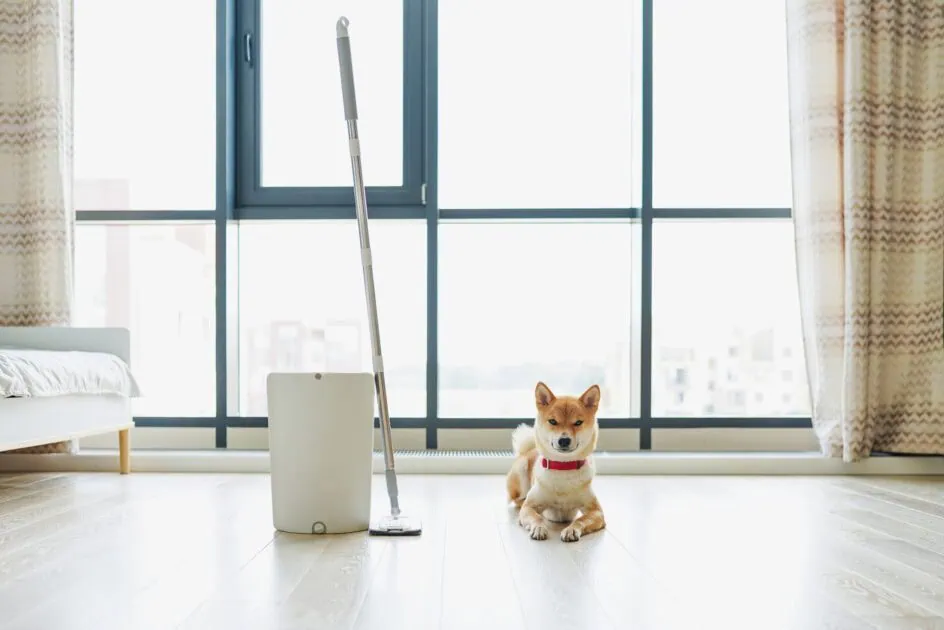
Your dog walks, lies, and plays on the carpets you’re having cleaned. Chemical residues left behind affect them directly.
Pet owners increasingly want cleaning solutions that eliminate odours without introducing harsh chemicals into homes where animals live.
Why Pet-Safe Products Matter
Dogs have more direct physical contact with professionally cleaned carpets than humans in the household. They lie on floors for hours daily. They lick their paws that touch treated surfaces.
Respiratory sensitivities to cleaning chemicals affect certain dog breeds more than others. Bulldogs, pugs, and other short-nosed breeds have compromised breathing. Makes them more vulnerable to chemical fumes.
Young puppies and senior dogs show greater vulnerability to harsh cleaning chemicals than healthy adult dogs. Young puppies explore everything with their mouths. Older dogs with compromised immune systems tolerate chemical exposure less well.
Green Cleaning Solutions That Work
Plant-based enzyme cleaners use naturally occurring beneficial bacteria to break down organic compounds in pet urine at the molecular level. These products work as well as synthetic alternatives for most odour situations.
Biodegradable, eco-friendly odour neutralisers eliminate pet smells without leaving persistent chemical residues in carpet fibres. Non-toxic water-based extraction solutions clean carpet fibres without harsh solvents or aggressive chemicals.
Despite what the bottle claims, green products work more slowly on heavy contamination. That’s just reality. Heavy buildup might need traditional chemicals. Or twice as much time with eco-friendly stuff.
Questions to Ask About Product Safety
Don’t assume “eco-friendly” means the same thing to every professional carpet cleaning company. Some use one or two green products while relying on traditional chemicals for tough jobs.
Ask directly: “What specific products do you use for pet urine treatment in carpets?” Get brand names. Research those products yourself to verify green claims.
Try asking: “Are your carpet cleaning products certified by recognised environmental or safety organisations like Green Seal or EPA Safer Choice?”
For dogs with chemical sensitivities, be explicit when booking. “My dog has skin allergies. What products do you use that are hypoallergenic for pets?”
KCS Kitchener Cleaning Services uses eco-friendly, green cleaning products throughout all their residential cleaning services. Their commitment to pet-safe solutions makes them a trusted choice for pet owners in Kitchener-Waterloo.
Factors That Affect Dog Odour Removal Success
Professional carpet cleaning sometimes completely eliminates dog smells. Other times, it reduces odours but doesn’t remove them entirely.
The difference depends on variables outside the cleaning company’s control. Understanding these factors helps you set realistic expectations.
Age and Severity of Dog Odour Buildup
Fresh pet accidents respond much better to professional carpet cleaning than years of accumulated odour. Urine that’s been in carpet for weeks comes out more easily than urine that’s been there for months or years.
Crystallised dried urine in older carpet stains resists even professional cleaning treatment. Those crystals have bonded with carpet fibres at a molecular level. Some can be removed. But complete elimination becomes increasingly difficult as stains age.
Multiple-dog households create more intense odour challenges. One dog’s occasional accident differs drastically from three dogs with regular marking behaviour. Layer upon layer of urine in the same areas creates an odour depth that single treatments struggle to address.
Carpet Type and Fibre Considerations
Natural carpet fibres like wool absorb pet urine liquids more readily than synthetic carpet materials. This makes them more comfortable and luxurious. But also means pet urine penetrates deeper and faster.
Synthetic fibre carpets like nylon or polyester resist liquid absorption better than natural materials. Pet accidents sit on the surface longer. Gives you more time to clean them before they penetrate deeply.
Sometimes, complete carpet replacement becomes necessary for severe pet contamination. If padding has been saturated with urine repeatedly over the years, no amount of carpet cleaning will eliminate odours permanently. The smell originates below the carpet itself.
Padding and Subfloor Contamination Issues
Pet urine that reaches carpet padding underneath creates problems that surface cleaning can’t fix. Padding absorbs and holds liquid like a sponge. Standard carpet cleaning equipment doesn’t penetrate the padding deeply enough to remove embedded contamination.
When carpet padding is affected by pet urine, you’ll notice odours return days or weeks after professional carpet cleaning is completed. The carpet itself is clean. But moisture from humidity or cleaning reactivates odours in the padding beneath.
Complete carpet padding replacement solves this contamination problem permanently. Pulling up carpet, removing contaminated padding, cleaning or sealing the subfloor, and installing fresh padding eliminates odour sources below carpet level.
Subflooring pet urine contamination represents the worst-case scenario for carpet odour removal. Urine that has penetrated through carpet and padding into wood or concrete subfloors creates persistent odour issues.
Professional, honest carpet cleaners tell you clearly when padding or subfloor contamination issues exist. They explain why carpet cleaning alone won’t solve the problem. What additional steps would be needed?
Preparing Your Home and Dog for Professional Cleaning
Pet owners need to prepare differently from households without animals. Your dog’s presence affects both the cleaning process and how you manage the service appointment.
Before the Cleaning Service Arrives
Walk through your home, identifying problem areas for pet odour for the professional cleaning crew. Note spots where your dog frequently lies down. Areas where accidents have occurred. Any locations where odour seems particularly strong.
Remove dog toys, beds, food bowls, and other pet items from carpeted areas scheduled for professional cleaning. Cleaners need clear access to all carpet surfaces.
Secure your dog in a safe, comfortable space away from the active cleaning area during service. A spare bedroom, basement, or outdoor space works depending on your home layout and weather.
Managing Your Dog During Cleaning
Pet anxiety during professional cleaning services is real for many dogs. Strange people in your home, loud equipment, and unfamiliar chemical smells stress many dogs.
Creating comfortable, safe spaces away from active cleaning activity helps reduce pet stress. A room with familiar bedding, some toys, and water makes confinement less stressful.
Some anxious dogs do better away from home entirely during cleaning services. Scheduling carpet cleaning during regular dog park visits, doggy daycare time, or when friends can watch your pet eliminates stress altogether.
After Cleaning Care
Wait several hours before allowing dogs back onto professionally cleaned carpets. Most professional services recommend two to four hours for carpets to dry enough for pet traffic.
Home ventilation speeds carpet drying and helps dissipate any cleaning product odours. Open windows if the weather permits. Run fans to increase air circulation.
Gradual supervised reintroduction prevents territorial marking behaviour on freshly cleaned carpets. Some dogs react to the altered smell of freshly cleaned carpets by marking territory. Supervise initial exposure to cleaned areas.
Maintaining Results Between Professional Cleanings
Professional carpet cleaning makes a noticeable difference. Walk into your home afterwards and smell the improvement.
Two weeks later, your dog has an accident. A month later, that fresh-cleaned smell has faded somewhat.
Results from professional cleaning don’t last forever without maintenance.
Quick Response to New Accidents
Blot fresh pet urine accidents immediately with paper towels or clean absorbent cloths. Press firmly to absorb as much liquid as possible. Avoid rubbing, which pushes urine deeper into carpet fibres.
Use safe pet-friendly interim cleaning products specifically designed for pet urine on carpets. Enzyme-based spot cleaners work well for fresh accidents. Apply according to product instructions.
Spot treat carpet accidents within hours when possible, to prevent deep penetration. Fresh urine hasn’t crystallized yet. Comes out much more easily than dried stains.
Regular Maintenance Practices
Daily or weekly consistent vacuuming schedules reduce pet dander and skin oil accumulation in carpet fibres. Frequent removal of surface debris prevents it from working deep into the carpet pile.
Dog grooming frequency directly affects how much dander and skin oil your dog deposits on carpets. Regular brushing removes loose fur before they transfer to the flooring. Occasional baths reduce overall odour load.
Washable area rugs in high-traffic pet zones protect permanent carpeting underneath from excessive wear. Washable rugs near doors, under food bowls, and in favourite lounging spots can be cleaned more easily than wall-to-wall carpet.
When to Schedule Your Next Professional Cleaning
Single-dog households with no ongoing pet accident issues might need professional carpet cleaning annually or every 18 months for odour control. Multiple-dog households need more frequent professional carpet cleaning attention. Two or three dogs create proportionally more dander, oils, and potential for accidents. Professional cleaning every six to twelve months makes more sense.
Signs indicating the need for professional carpet cleaning include returning pet odours despite regular vacuuming. Visible carpet staining or discolouration. Dogs showing renewed interest in previously cleaned areas. Guests mentioning persistent smells.
Choosing Pet-Friendly Carpet Cleaning in Your Area
Every carpet cleaning company claims they can handle pet odours. Some actually deliver results. Others leave you disappointed and still living with a dog smell.
Finding quality pet-focused carpet cleaning in Kitchener-Waterloo requires asking the right questions.
Essential Questions for Pet-Friendly Services
Verify pet-safe cleaning product use explicitly when contacting services. “Do you use products specifically formulated as safe for homes with dogs?”
Ask about direct hands-on experience with dog odour removal from carpets. “How much of your business involves treating pet urine and odour issues?” This reveals whether pet work is their speciality or something they occasionally handle.
Inquire about written satisfaction guarantees for pet odour removal services. “What happens if dog smells return after cleaning?” Quality services stand behind their work.
Check the availability of eco-friendly green cleaning options for pet odour treatment. “Do you offer green cleaning alternatives for pet odour treatment?”
Request complete pricing transparency for pet-related carpet cleaning services upfront. “How do you price carpet cleaning when pet odour treatment is needed?”
Quality Indicators in Local Companies
Customer reviews specifically mentioning pet odour elimination success matter more than generic positive reviews. Look specifically for comments about dog smell. Urine stains. Lasting results.
Professional industrial-grade equipment and specialised cleaning solutions separate quality services from basic operations. Truck-mounted extraction systems outperform portable units. Specialised UV lights for stain detection show commitment to thorough work.
Local family-operated business knowledge of regional climate challenges matters for carpet maintenance. Companies operating in Kitchener-Waterloo for years understand Ontario homes. Weather patterns. Local pet owners’ concerns are better than new or distant services.
While KCS Kitchener Cleaning Services doesn’t specialise in carpet cleaning, their free estimate process, transparent communication approach, 5-star community rating, and pet-friendly expertise demonstrate the kind of quality indicators pet owners should seek in any service provider. Their local family operation since 2022 in Cambridge, Ontario, gives them a deep understanding of regional challenges affecting pet owners throughout Kitchener-Waterloo and Guelph.
The Bottom Line: Can Professional Cleaning Eliminate Dog Smell?
Yes, professional carpet cleaning can improve or eliminate dog odours in most situations. Success depends on odour type, age, severity, carpet material, and professional expertise.
Perfect results aren’t guaranteed. Years of accumulated urine, contaminated padding, or subfloor damage sometimes resist even the best treatments. But most pet owners see substantial improvement after quality service.
Realistic expectations matter more than unrealistic promises. Services guaranteeing complete odour elimination for all situations likely oversell their capabilities. Honest professionals explain what’s achievable given your specific circumstances.
Request free detailed estimates from multiple providers. Explain your pet situation: number of dogs, accident frequency, and odour duration. Ask specific questions about pet-safe products and certifications. Check reviews focusing on success stories of pet odour elimination. Verify written satisfaction guarantees and what happens if odours return. Consider preventative maintenance scheduling rather than waiting until odours become unbearable.
KCS Kitchener Cleaning Services offers flexible scheduling (weekly, monthly, annual, one-time) with a 100% satisfaction guarantee and a pet-friendly approach for general home cleanliness.
For specialised carpet odour treatment, seek dedicated carpet cleaning professionals with specific training in deep extraction methods and pet odour elimination. Combining general residential cleaning with specialised carpet care maintains fresh, comfortable homes.