
To clean a stainless steel stove, wipe the surface with warm soapy water using a microfiber cloth, always moving with the grain of the steel. For stubborn stains, apply a baking soda paste, gently scrub with the grain, then rinse and dry thoroughly. Finish by buffing a few drops of mineral oil across the surface to restore a streak-free shine and leave a protective layer against fingerprints.
This guide covers everything you need to know about cleaning a stainless steel stove. You’ll learn daily routine cleaning, deep cleaning, stubborn stain removal, polishing, what products to avoid, and long-term maintenance. Whether you have a stainless steel stovetop on a freestanding range or a built-in stainless steel cooktop, the techniques are the same. The cleaning specialists at KCS Kitchener Cleaning Services have cleaned hundreds of residential kitchens across Kitchener, Waterloo, and Cambridge, and the techniques here reflect the same professional-grade methods used on every service call to restore stainless steel surfaces to a like-new shine.
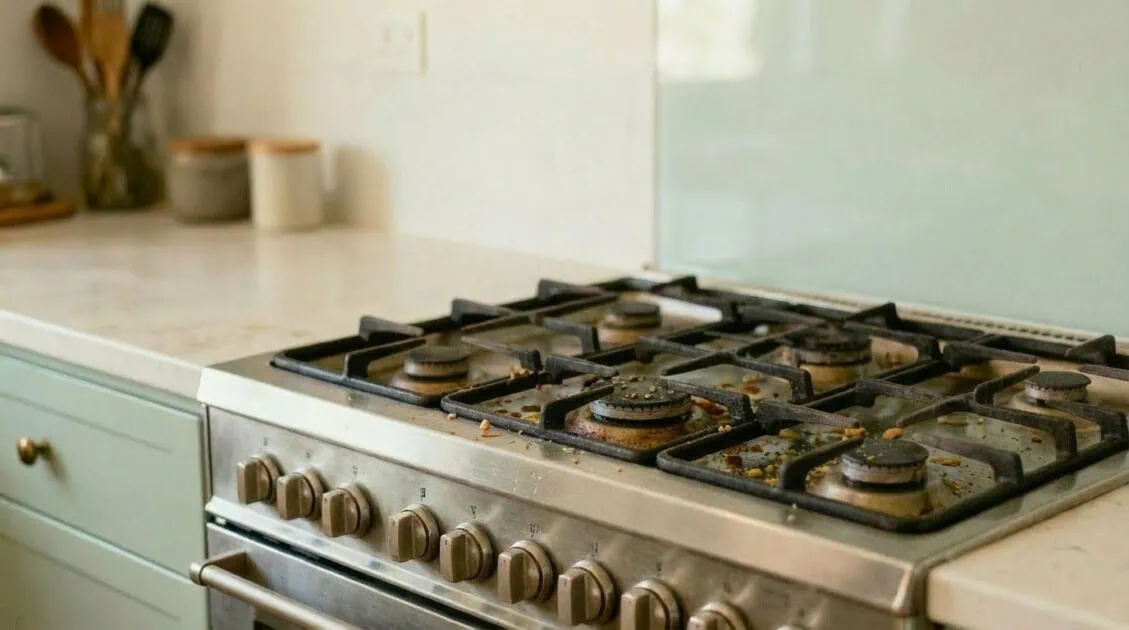
Stainless steel looks sleek when clean. But it shows every fingerprint, water spot, and grease splatter. The reason it requires specific cleaning methods comes down to two things: its protective layer and the grain direction of its brushed finish. The protective layer is a thin chromium oxide layer that keeps the metal resistant to rust. Understanding these two characteristics is the foundation of proper stainless steel care.
What You Need to Clean a Stainless Steel Stove (Essential Supplies)
Before you start, gather these supplies so you can work through the entire cleaning process without interruption.
Essential Cleaning Supplies
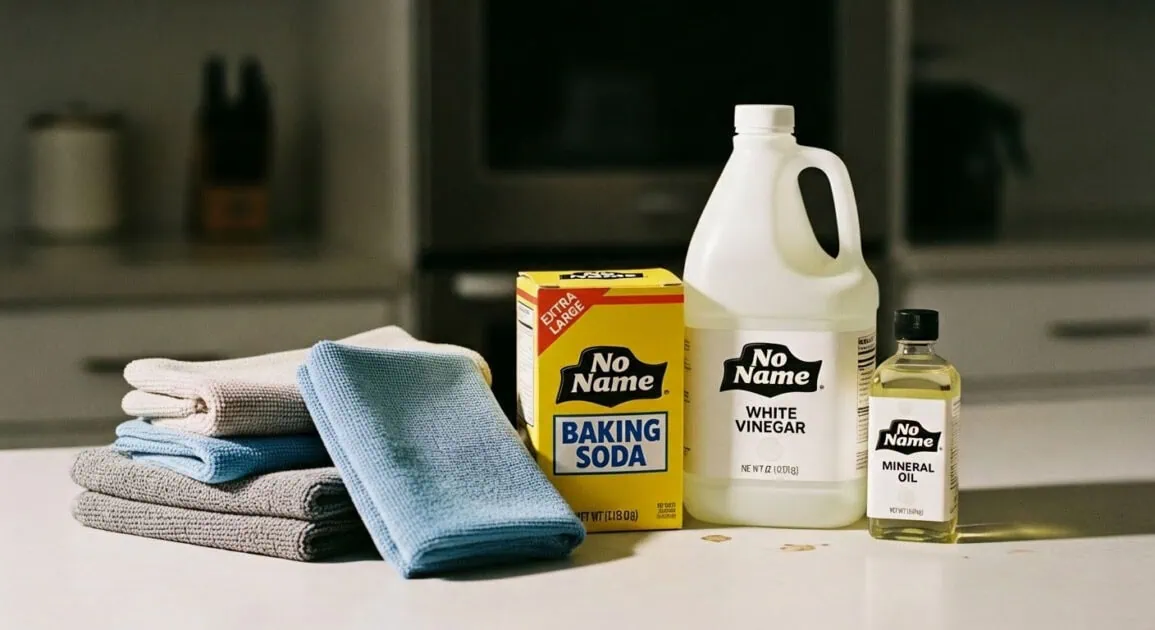
- Microfiber cloths (2-3) – Non-abrasive and won’t scratch the finish. Use one for washing, one for rinsing, one for drying.
- Mild dish soap – Dawn, Palmolive, or any non-abrasive liquid dish soap.
- Baking soda – A gentle yet effective mild abrasive for baked-on food and discoloration.
- White vinegar – Excellent for degreasing and removing water spots and mineral deposits. Dilute in a spray bottle (equal parts vinegar and water).
- Spray bottle – For applying the vinegar solution evenly.
- Warm water – The base for most cleaning solutions.
For Polishing and Protection
- Mineral oil – Creates a thin, food-safe protective layer that reduces fingerprints and produces a like-new shine.
- Clean dry microfiber cloth – Separate from your cleaning cloths, dedicated to polishing only.
Optional (for Stubborn Stains)
- Bar Keepers Friend or Bon Ami – Mildly abrasive powder cleansers for heavy stains.
- Non-abrasive sponge – Use the soft side only.
- Soft-bristle brush – Useful for cleaning grates and reaching into crevices around burners.
How to Find the Grain Direction on Your Stainless Steel Stove
The grain on stainless steel refers to the directional brushed pattern created during manufacturing. Every stainless steel surface has fine parallel lines running in one consistent direction, usually horizontal on stovetops. Every cleaning motion should follow this grain to achieve a streak-free, scratch-free result. To find the grain, look at the surface under direct light and identify the fine parallel lines. If the lines are difficult to see, run a dry cloth across the surface in different directions. The direction that glides with less resistance is with the grain. On some appliances, the oven door panel may have a vertical grain while the stovetop has a horizontal grain. Check each surface independently.
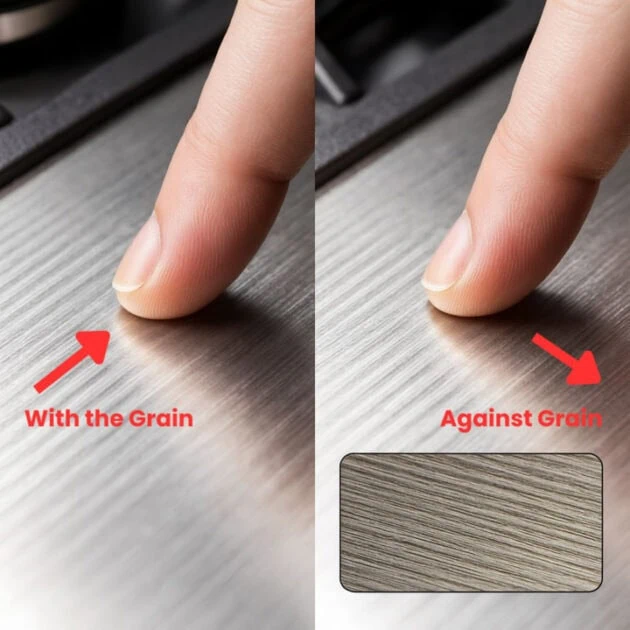
Cleaning with the grain matters because it follows the microscopic grooves in the brushed finish, allowing the cloth to reach into them and lift out trapped dirt, grease, and residue. Wiping against the grain pushes debris across the grooves instead of out of them, creating visible streaks.
How to Clean a Stainless Steel Stove Step by Step
This five-step process is the standard routine cleaning method for regular maintenance. Use it after everyday cooking to keep your stainless steel stovetop looking its best.
Step 1. Clear the Surface and Cool the Stove
Remove grates, drip pans, burner caps, and any loose items from the stainless steel stovetop. Make sure the stove is completely cool before applying any cleaning solution. Cleaning a hot surface can cause products to evaporate too quickly, leaving residue and streaks behind.
Step 2. Wipe Down with Warm Soapy Water
Mix a few drops of mild dish soap into a bowl of warm water. Dampen a microfiber cloth in the solution and wring it out so it’s damp, not dripping. Wipe the entire stainless steel stove surface with the grain. Work in sections on larger stovetops, applying light, even pressure in long strokes.
Step 3. Rinse and Dry with the Grain
Dampen a clean cloth with plain warm water and wipe the surface to remove soap residue. Immediately follow with a separate dry cloth, drying with the grain in long strokes. Drying promptly prevents water spots from forming.
Step 4. Spot-Treat Remaining Marks
For any spots that didn’t come off, make a baking soda paste by mixing three parts baking soda with one part water until it forms a thick paste. Apply a small amount to the stain with a soft cloth and gently rub with the grain. Wipe clean with a damp cloth and dry immediately.
Step 5. Buff to a Streak-Free Finish
Using a clean, dry cloth, buff the entire stainless steel stove surface with the grain in long, even strokes. This removes any remaining moisture and produces a streak-free shine. For an extra-polished finish, you can apply a thin coat of mineral oil at this stage.
To clean a stainless steel stove, follow these five steps: clear the surface and let the stove cool, wipe with warm soapy water using a microfiber cloth with the grain, rinse with clean water and dry immediately, spot-treat any stubborn marks with a baking soda paste applied with the grain, and buff the entire surface dry for a streak-free finish. This routine cleaning process takes roughly 10 to 15 minutes and should be performed weekly or after heavy cooking sessions.
How to Deep Clean a Stainless Steel Stove
Deep cleaning goes beyond the daily or weekly routine. Plan to deep clean monthly, or when routine cleaning doesn’t fully restore the surface.
The Baking Soda Method
To deep clean a stainless steel stove with baking soda, mix three parts baking soda to one part water to create a thick paste. Spread the paste over the stained or discolored area with the grain using a soft cloth or your fingertips. Let the paste sit for 15 to 20 minutes on baked-on food and heavy residue, or 5 to 10 minutes for lighter buildup. The dwell time allows the baking soda to break down grease and loosen hardened deposits. After the paste has set, gently scrub the area with a non-abrasive sponge, always moving with the grain. Wipe the surface clean with a damp cloth.

The White Vinegar Follow-Up
After removing baking soda residue, fill a spray bottle with equal parts white vinegar and water. Spray the solution evenly across the surface you just cleaned. The mild fizzing reaction between any remaining baking soda and the vinegar lifts additional residue from the surface. Wipe clean with a damp cloth, then dry immediately with the grain using a separate dry cloth. This vinegar step also acts as a natural degreaser and descaler, removing any lingering mineral deposits.
Final Rinse and Dry
Rinse the entire stovetop with a clean damp cloth to remove all traces of cleaning products. Dry thoroughly with a fresh dry cloth, wiping in one direction with the grain.
How to Remove Stubborn Stains and Baked-On Food
Different types of stains respond to different treatments. For fresh grease, warm soapy water is enough. For dried or hardened grease, apply the paste to the affected area, let it sit for 10 to 15 minutes, and scrub gently with the grain. For heavy grease buildup, spread the paste over the area and lay a warm, damp cloth on top for 20 minutes before scrubbing.
Baked-On Food and Burnt Residue
Baked-on food requires patience more than force. Apply the paste with an extended dwell time of 20 to 30 minutes. For severe cases where baking soda alone isn’t enough, use Bar Keepers Friend following the package directions. Apply a small amount to a damp non-abrasive sponge and work with the grain using light pressure. Never scrape baked-on food with metal utensils, razor blades, or putty knives. Scraping damages the protective layer and creates permanent scratches that trap future dirt.
Water Spots and Mineral Deposits
Water spots are mineral deposits left behind when water evaporates on the surface. They’re especially common in homes with hard water. Spray a white vinegar solution directly on the water spots and let it sit for five minutes. Wipe with the grain using a microfiber cloth. For stubborn marks, apply undiluted white vinegar directly to the cloth.
Fingerprints and Smudges
For light fingerprints, a dry cloth is often all you need. Simply buff the surface with the grain. For persistent smudges, apply a small amount of mineral oil to a soft cloth and buff with the grain. Regular mineral oil polishing makes future fingerprints less visible and easier to wipe away.
How to Polish and Protect Your Stainless Steel Stove
Polishing is the finishing step after cleaning. It restores the stainless steel’s natural luster and creates a temporary protective layer that repels fingerprints.
Choosing a Polishing Agent
Mineral oil is the preferred choice for polishing stainless steel. It creates a thin, non-sticky protective layer that doesn’t go rancid and is completely food-safe. Olive oil produces a similar initial shine but can become slightly sticky over time. Use olive oil sparingly if you choose it.
How to Apply Polish for a Streak-Free Shine
To polish a stainless steel stove, place three to five drops of mineral oil onto a clean, dry microfiber cloth. Buff the entire surface with the grain in long, even strokes, working from one side to the other. Use light pressure. The goal is a thin, even coat, not a heavy application. After covering the entire surface, allow the oil to sit for one to two minutes. Then buff again with a fresh dry cloth to remove any excess oil and produce a uniform, streak-free, like-new shine.
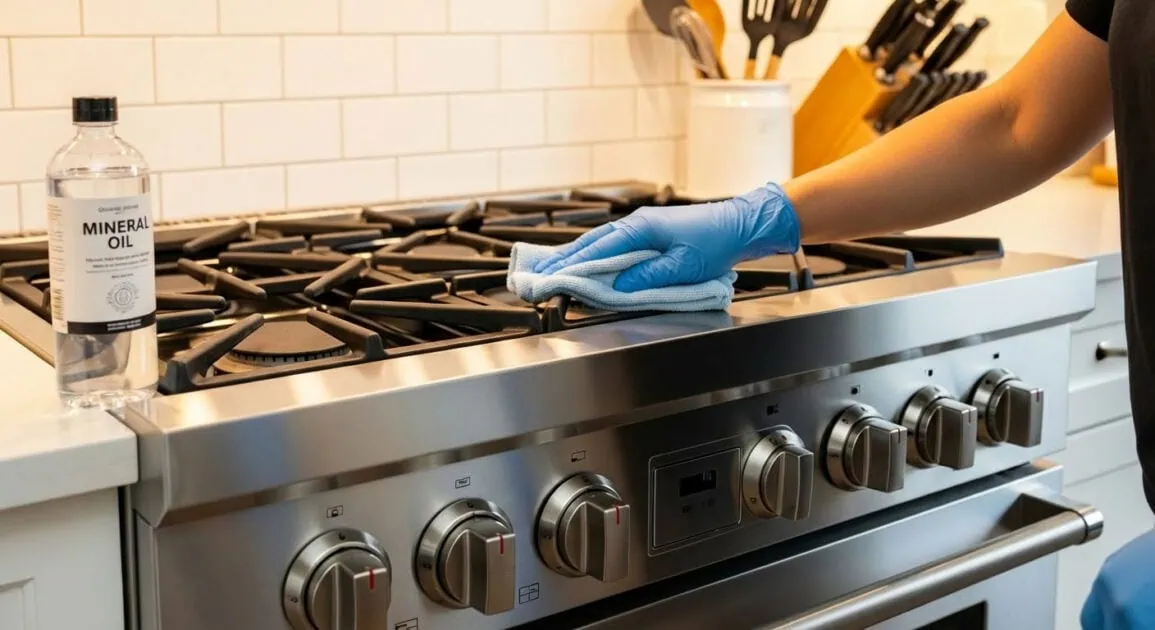
With mineral oil, the fingerprint-resistant finish lasts one to two weeks of normal kitchen use. Reapply after every deep cleaning session or whenever fingerprints become noticeably more visible.
What NOT to Use on a Stainless Steel Stove
Products That Damage Stainless Steel
The following products and materials should never be used on stainless steel cooking surfaces:
- Steel wool and abrasive scrubbing pads – Create permanent scratches in the brushed finish that trap dirt, moisture, and bacteria. The damage is irreversible.
- Bleach and chlorine-based cleaners – Attack the chromium oxide layer directly, causing pitting and corrosion.
- Ammonia-based cleaners (including Windex) – Can discolor the surface with repeated use and gradually break down the protective layer.
- Abrasive powdered cleansers (like Comet) – Contain microscopic abrasive particles that scratch the brushed finish.
- Oven cleaner – Far too caustic for stainless steel surfaces. Can cause permanent discoloration and damage.
Why These Products Cause Damage
Stainless steel gets its corrosion resistance from the chromium oxide layer, a thin invisible film that forms naturally on the surface. Harsh chemicals like bleach, ammonia, and oven cleaners strip this protective film, exposing the base metal to oxidation. Abrasive materials physically tear through it, creating localized areas of vulnerability. Once compromised, that area becomes susceptible to rust, permanent staining, and accelerated corrosion.
How to Prevent Fingerprints on Your Stainless Steel Stove
The single most effective prevention strategy is a quick daily wipe-down after each cooking session. Take a dry or barely damp cloth and wipe the stovetop surface with the grain. This takes roughly 30 seconds and prevents grease, fingerprints, and cooking residue from building up into grime that requires deep cleaning later.
Regular mineral oil polishing (once a week or after each deep cleaning) significantly reduces fingerprint visibility. The oil fills the microscopic grooves in the brushed finish, creating a smoother surface that reflects light more evenly.
How Often Should You Clean a Stainless Steel Stove?
For a stainless steel stove that looks its best, follow this cleaning frequency schedule:
- Daily: Quick wipe with a dry cloth after each cooking session (30 seconds).
- Weekly: Full routine cleaning using the five-step process (warm soapy water, rinse, dry, spot treatment, and buff).
- Monthly (or as needed): Deep cleaning with baking soda and white vinegar for any buildup that routine cleaning doesn’t resolve.
- After each deep clean: Apply mineral oil polish to restore the protective layer and reduce future fingerprint visibility.
Households with heavy daily cooking may need the full routine cleaning two to three times per week. Lighter-use kitchens may find weekly cleaning enough. Adjust the schedule based on how quickly your stovetop shows visible soil or fingerprints.
Why Stainless Steel Needs Special Care
Stainless steel is an alloy composed primarily of iron, chromium, and nickel. The chromium content reacts with oxygen in the air to form a thin, invisible chromium oxide layer across the entire surface. This “passive film” gives stainless steel its resistance to rust and staining. Cleaning products that are too acidic, too alkaline, or physically abrasive can damage this protective layer, leaving the underlying iron exposed to moisture and corrosion.
The brushed finish you see on most stainless steel stovetops is created by mechanical polishing during manufacturing. This produces microscopic parallel grooves running in one consistent direction. Cleaning with the grain follows these grooves, allowing the cloth to reach into them and lift out trapped particles. Cleaning against the grain pushes debris across the grooves, creating visible streaks.
Stainless Steel Stove Cleaning FAQ
Can you use vinegar on a stainless steel stove?
Yes. Diluted white vinegar (equal parts vinegar and water) is safe and effective as a degreaser and descaler. The mild acidity cuts through grease and dissolves water spots without damaging the protective layer. Always rinse and dry after use.
Is baking soda safe for stainless steel?
Yes. Baking soda is a mild abrasive that’s gentle yet effective for a stainless steel stove when mixed into a paste with water. It removes baked-on food, grease, and discoloration without scratching the surface. Always apply with a soft cloth, rubbing with the grain.
What is the best homemade stainless steel cleaner?
A paste of baking soda and water (three parts baking soda to one part water) is the most effective homemade cleaner for stubborn stains and deep cleaning a stainless steel stove. For everyday routine cleaning, a few drops of mild dish soap in warm water works well. Finish with a few drops of mineral oil for a protective layer and like-new shine.
Can you use Windex on a stainless steel stove?
No. Windex and other ammonia-based glass cleaners are not recommended. Ammonia can discolor the surface and break down the chromium oxide layer that keeps stainless steel resistant to rust. Use a dedicated stainless steel cleaner or the natural alternatives described in this guide instead.
How do you get a stainless steel stove to shine like new?
First clean the surface thoroughly using the routine cleaning or deep cleaning method. Apply baking soda paste for any stains and follow with a white vinegar rinse. Once the surface is clean and completely dry, apply three to five drops of mineral oil onto a dry cloth and buff the entire surface with the grain in long, even strokes.
Does olive oil really work on stainless steel?
Yes, olive oil works as a polish and produces a visible shine. But mineral oil is the better long-term choice because it doesn’t go rancid and doesn’t attract dust. Olive oil can become slightly sticky over time, especially in warm kitchens. If you use olive oil, apply it very sparingly and buff thoroughly.
Is Dawn dish soap safe for stainless steel?
Yes. Dawn and other mild dish soaps are safe and effective for routine cleaning of a stainless steel stove. Mix a few drops in warm water, apply with a cloth, and wipe with the grain. Rinse thoroughly and dry immediately to prevent water spots.